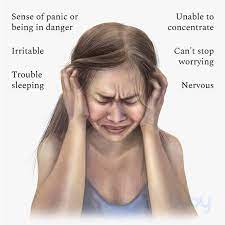
Nothing robs potential from an individual more than chronic anxiety. The physiological symptoms alone can stop a person from wanting to participate in life, on top of this can be overlaid intense feelings of inadequacy, self-doubt and negative thinking. Chronically anxious people can be self-conscious if they are experiencing hard-to-disguise physical manifestations such as shaking hands, facial tics or trembling limbs. Even if you suffer from a low grade anxiety it can rob life of so much joy and spontaneity and make seemingly simple things seem very difficult.
The term anxiety really entered popular discourse in the American led psychological revolution of the 1960s and 1970s. Woody Allen famously depicted a chronically anxious character in many popular films of the time. However, what was funny then has often become the reality of our lives now in the 21st Century. Earlier in the 20th century the term used for anxiety was “worry” and there was much good advice about it and it can be fascinating to look up this condition and see the excellent advice that was given. The advice is still good and relevant for our times so I have borrowed a few ideas from some very old books for this article because I have used them in my practice and know they work.
The good news about anxiety is that it is one the most physically responsive of all the mental disturbances. Anxiety has a physical base and therefore there is much we can do to alleviate this condition fairly easily. We may not eradicate it but for a chronically anxious soul to have a 50% reduction could be life changing.
Anxious people really would be well advised to cut down on their media consumption. Nothing is designed to provoke more anxiety that a nightly or daily dose of negativity from the mainstream media. Winston Churchill wrote “it’s startling how the great events of the age often leave the ordinary person completely untouched”. We need to remember this comment when focussing on such irrelevant issues as international politics, global warming, etc, etc. Turning off the TV and thinking and doing what we can for our families, our communities and our own lives is a great step towards feeling back in control.
The first thing I do when I see an anxious client is give them a brief anxiety questionnaire. The questions are focussed on when they eat, what they eat, when they exercise, for how long, if they have 15 minutes a day to themselves to practice simple quiet time or meditations and specifically what times of the day are they anxious. This is because anxiety, especially acute anxiety, is so heavily influenced by blood sugar levels and movement. The Linden Method is a famous UK method (available online) that is based on the work of Charles Linden and he recovered from severe anxiety that had turned him into a prisoner in his home for 10 years by simply making some significant changes to his lifestyle. Many people who wake at 3am with severe anxiety symptoms can often take a spoon of honey or sugar and their desperate anxiety will abate within 20 minutes. This is because their blood sugar dropped so much overnight.
I also ask clients to keep a thought journal (very similar to depression) where they log the thoughts they are having, the issues they are anxious about and what happens when they think of those issues. It’s a good tool for identifying and challenging thoughts that are not helpful.
It’s important to realise that there are two distinct types of anxiety. There is a focused anxiety where the individual will clearly know exactly what it is they are anxious about. Then there is a free-floating generalised anxiety. This is where the individual feels anxious but they cannot particularly identify a specific issue. They are often diagnosed with generalised anxiety disorder. However, they could also be experiencing the Anxiety Trap which is really important to be aware of. Basically in the Anxiety Trap the individual feels anxious, perhaps they are suffering from physiological anxiety but they then look around their lives to find out what it is that is making them anxious and fix onto something. Most individuals are not even aware they are doing this at all as it just seems logical to find the thing that is making them anxious and then attach their anxiety to this. Therapy will often uncover this and can be of great help to the client.
We use hypnosis routinely with anxiety. As with depression, hypnosis is the single, most effective way to reframe negative thoughts and replace them with more productive thoughts. Many people who suffer from long term anxiety will described literally terrifying themselves with feelings of doom and despair. Hypnosis can help these individuals enormously. We can also uncover any experiences in early childhood that may have led to these thoughts.
Anxiety is a difficult thing to experience but the good news is that there are lots of ways to alleviate and eradicate this potential-destroying mindset. Once an individual sets out to deal with this they are often pleasantly surprised how easy it is to move on from this pattern.